Ardoise
The instrument
A mast-foot display, readable from the cockpit, on the boat's NMEA 2000 bus.
- Power and data
- NMEA 2000
- Other sources
- Signal K · phone
- Refresh
- 1 Hz
- Control
- Phone, no buttons
The need
When racing, the useful numbers are read at a glance from the cockpit or the rail: countdown, speed, heading and lift, wind angle and strength. At three to six metres, in full sun, with or without polarised glasses.
The screen
A reflective memory screen: black on white, refreshed every second, without the ghosting of e-paper. It returns daylight the way a printed sheet does. The pages are drawn for distance: three giant digits rather than four small ones.
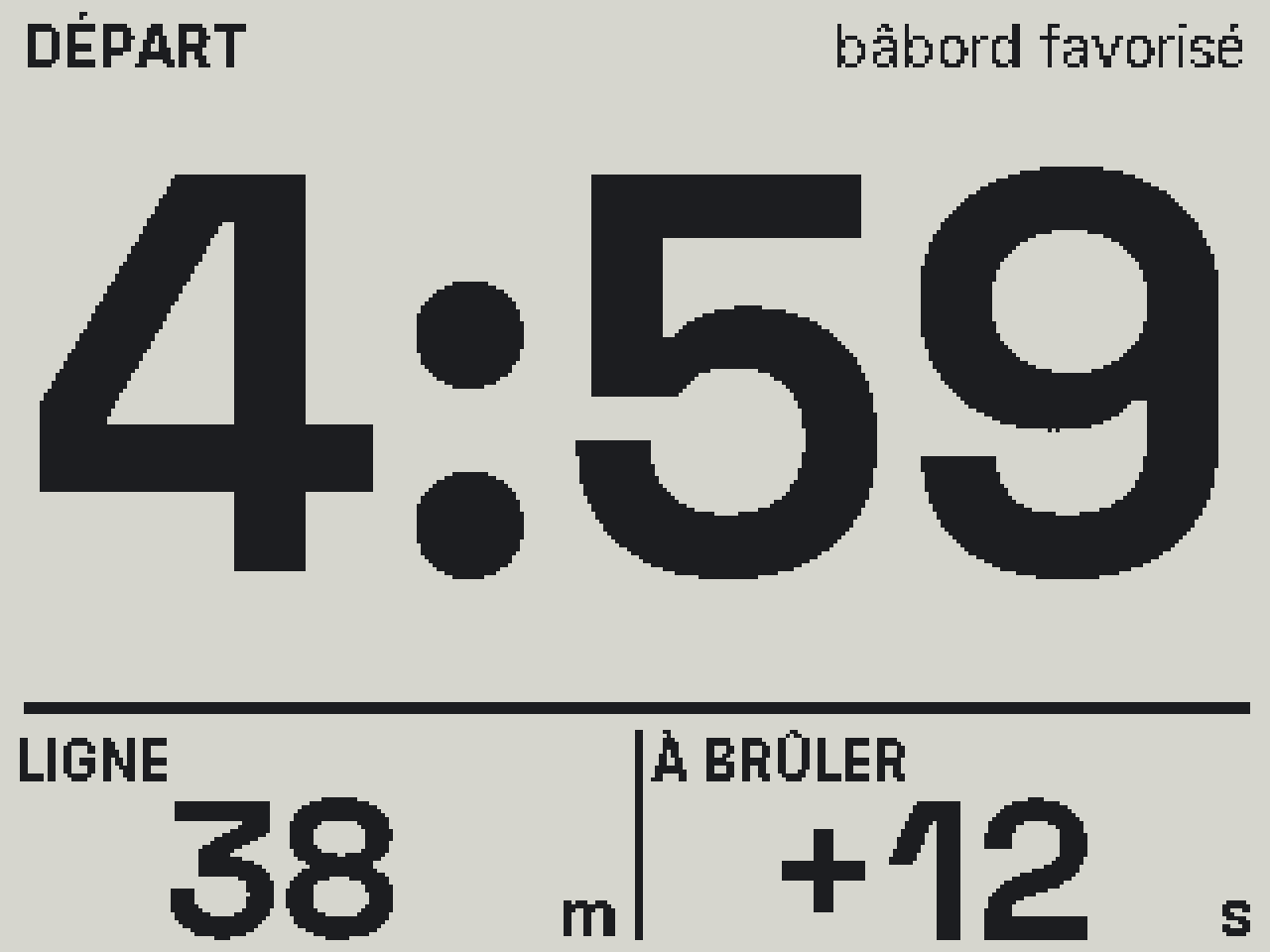
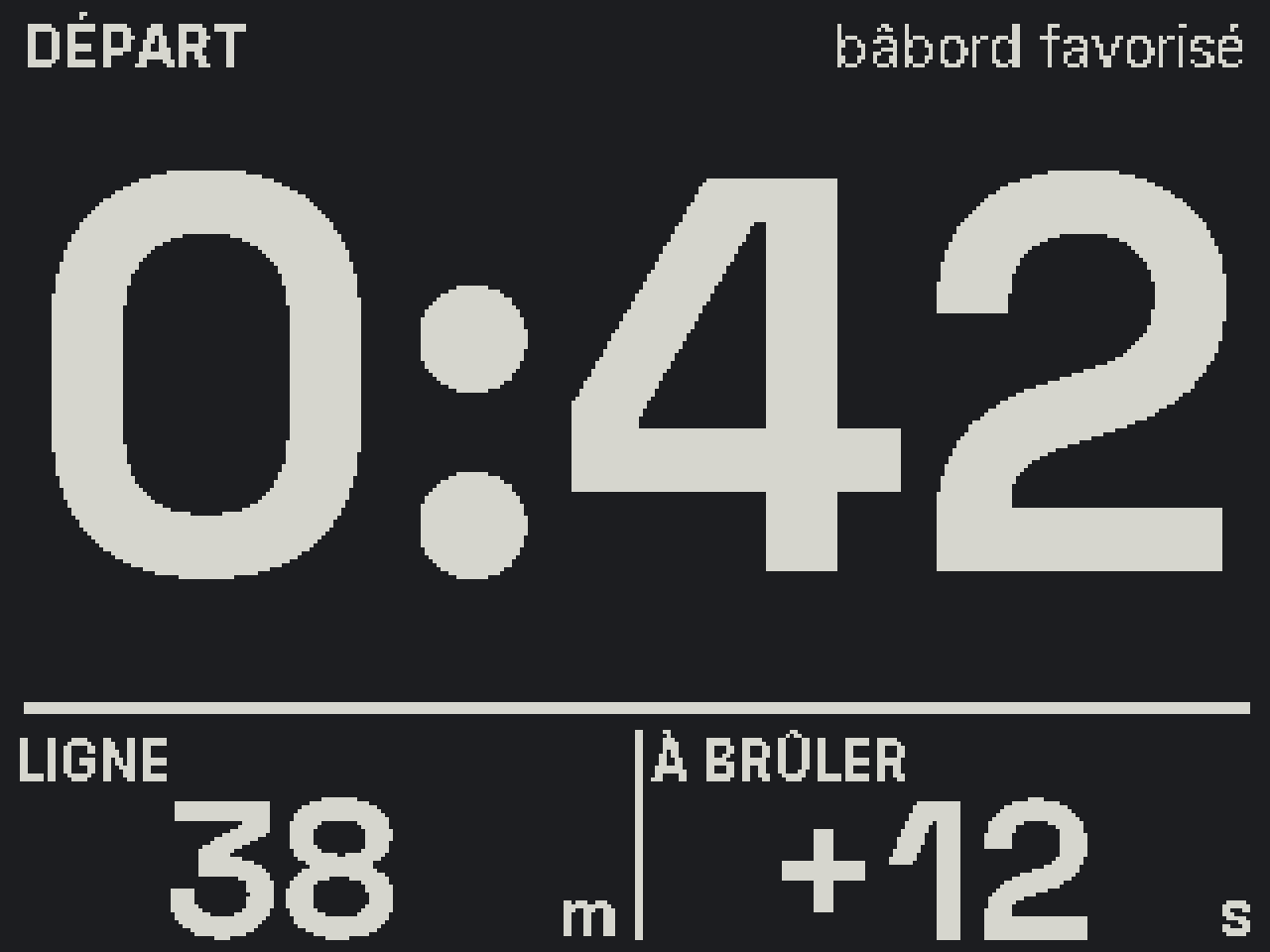
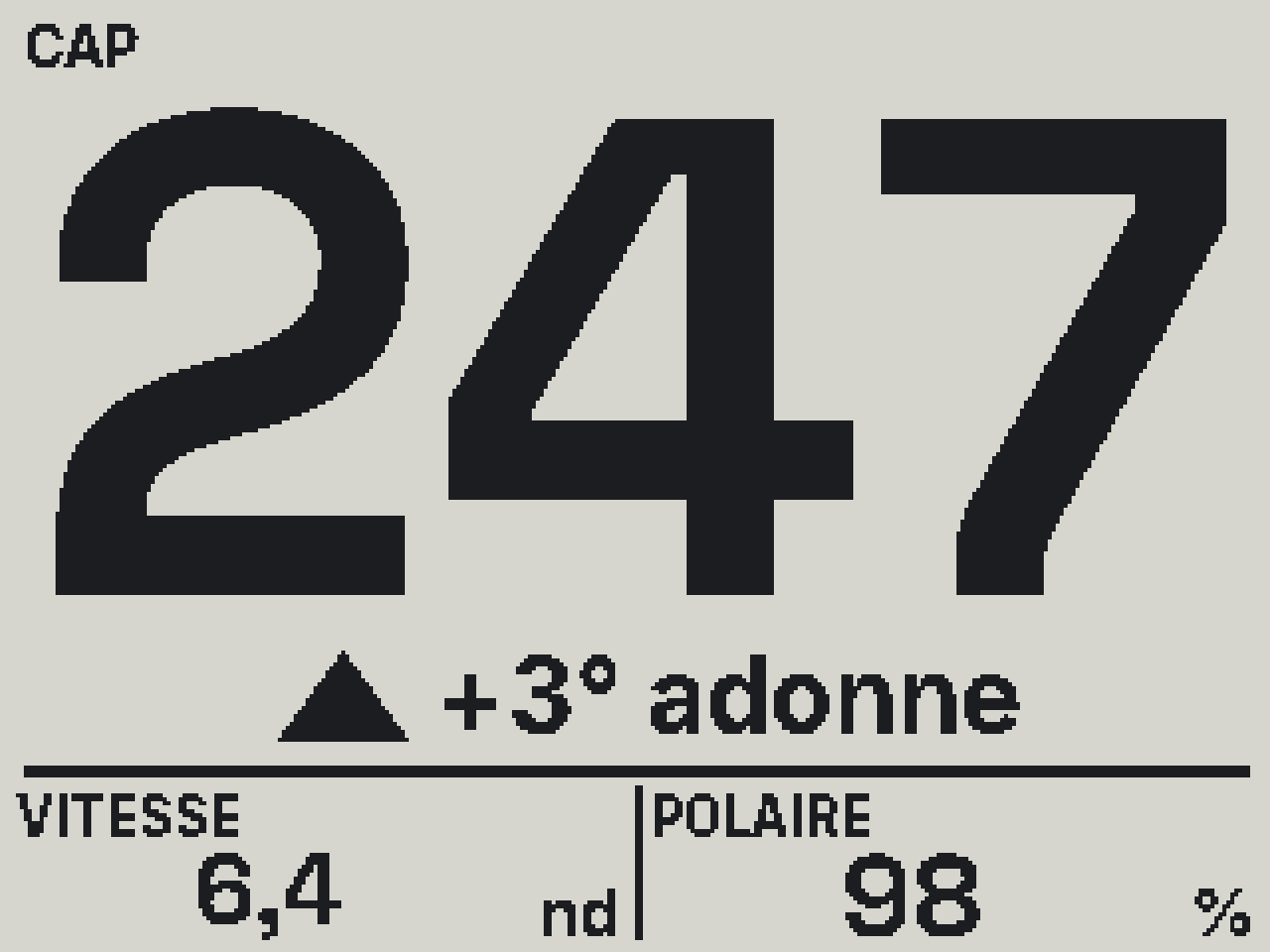
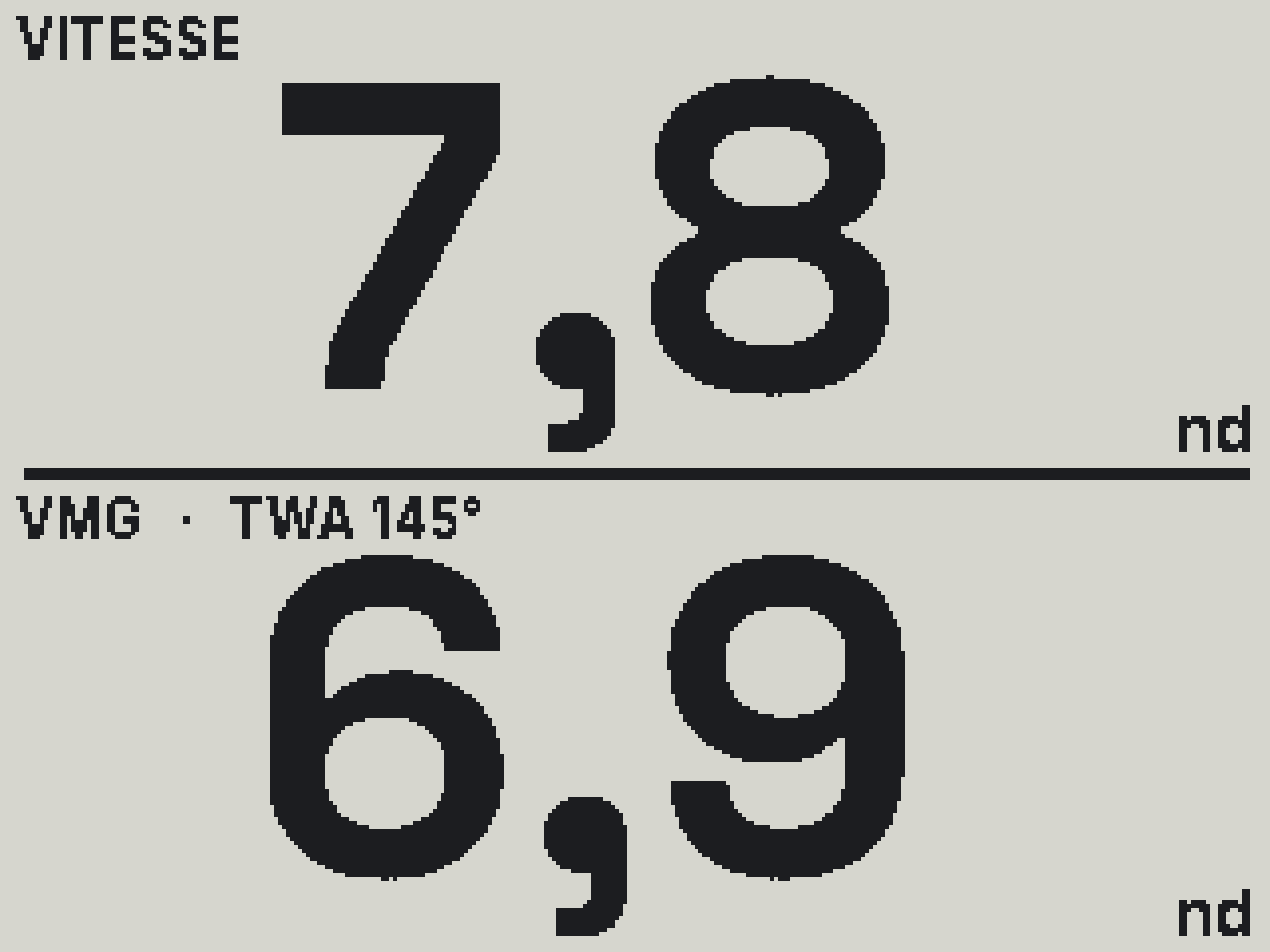
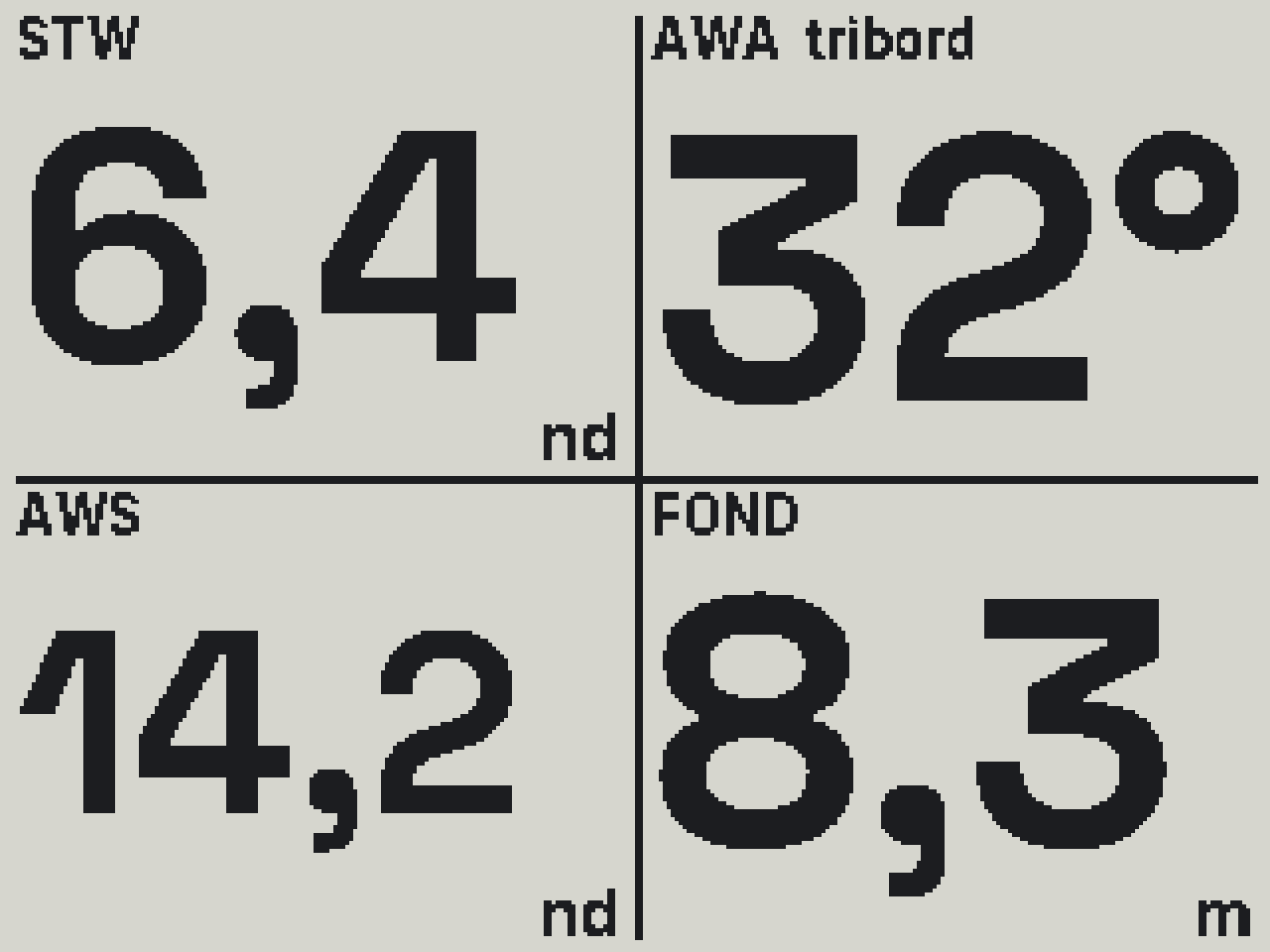
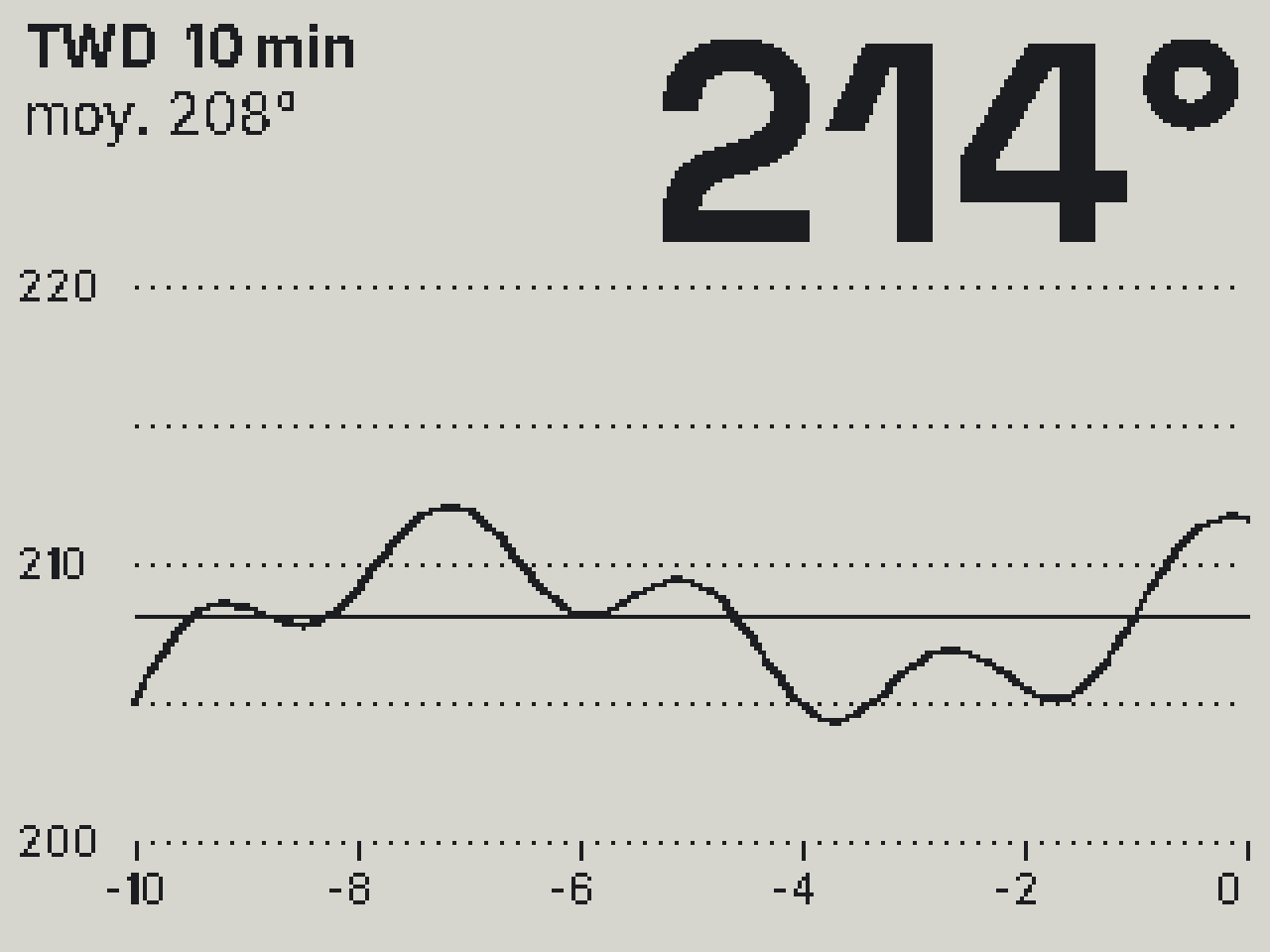
Design mock-ups, example values. Resolution and typefaces of the series may differ.
The sources
Ardoise reads the NMEA 2000 bus it is plugged into: speed, heading, wind, depth, position. If there is a Signal K server on board, it reads that too, over Wi-Fi. The phone sets the pages, pings the line and syncs the start. The countdown runs on the instrument’s own clock: if the link drops, it carries on.
An on-board compass gives heading, heel and pitch, even with no other instrument on board.
One cable
A single connector, at the bottom of the tube: the bus drop powers it and brings the data. No other cable entry, no buttons.
Endurance
A machined aluminium tube, closed by a flush window and an aluminium plate. The foot of the mast takes green water, UV, the heat of a surface in the sun and the vibration of the rig. Sealing and environmental tests will be run, and their reports published.
Service
Firmware updates over the air, as signed images. The enclosure opens with tools and its seals are replaceable: the atelier will be able to repair every unit.
The making
Ardoise will be made in small numbered series.
On request. Get in touch